Wednesday, September 16, 2015

Alternatives to Medical Marijuana


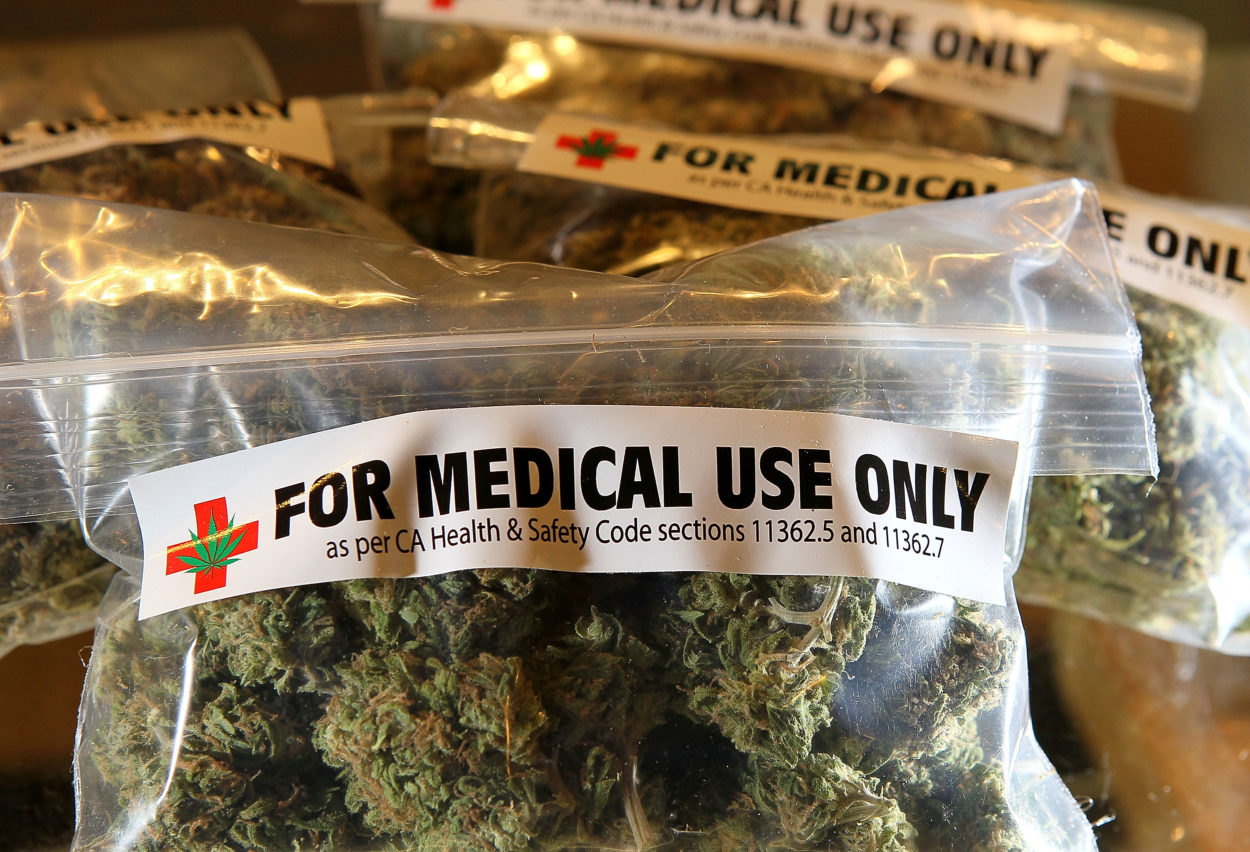
     The main argument people have for legalizing marijuana is that it's necessary for medical use and legalizing it would make it much more accessible. The problem with this statement, however, is that there are many alternative people available for people that have the same medical impacts that marijuana does. With the advances made in biology, chemistry, and medicine, there are many medications available that could be substituted for marijuana, making it so legalizing the drug would be unnecessary.

     To first understand what prescribed medications can do to substitute marijuana, you have to first understand what marijuana does as a medical treatment. Primarily, marijuana is used to combat pain and nausea. It also is sometimes prescribed to people because it activates the patient's CB1 receptors, which create the 'high' feeling people experience when using marijuana. This high is the primary reason some people seek marijuana as a medical agent, rather than alternatives which are just as safe if not safer than marijuana.

     For combating pain, there are over the counter medications which have the same impact as marijuana, and many of them you may actually have in your medicine cabinet. Medications like ibuprofen and acetaminophen are available without prescription and do the same things marijuana does in combating the pain. Codeine, which is only available through prescription, was found in nine review trials to be just as, if not more, effective in combatting acute, chromic, and cancer pain when compared against marijuana. 
   
     For combatting nausea, there are also medications available to fight the nausea chemotherapy and radiation patients experience. While marijuana is effective, there are multiple alternatives to marijuana both over the counter and through prescription. Unlike marijuana, however, while many of these medications don't have the same damaging effects marijuana has, some can cause anxiety and interact with other medications, which is why marijuana is still offered. There are many home remedies, though, which combat nausea as well. for example, eating slices of ginger is one home remedy which works to combat nausea.

     For activating the brain's CB1 receptors, there aren't many alternatives to marijuana. However, there aren't really any reasons to need a medical alternative considering activating the CB1 receptors is basically a fancy way of saying "getting high." When marijuana is used, the chemical tetrahydrocannabinol binds to sites in the brain and nervous system called cannabinoid, or the CB1 receptors. When these are activated, they release neurotransmitters that produce the euphoric effects of marijuana, or in other words, the high people experience when they use marijuana. If this process is truly necessary for medical use, there are synthetic compounds slowly becoming more available as more and more tests prove their safety. One study has found that synthetic compounds in frog eggs can have the same impact as marijuana. It is still in medical trials, but it's on it's way to becoming available for public use.

     So, in other words, there are many alternatives to medical marijuana which make it so legalizing recreational marijuana is unnecessary. There are too many negatives to marijuana such as the addiction it causes which do not outweigh the positives. The primary argument many people make is medical use, but as stated above there are many alternatives. Legalizing marijuana is unnecessary, and Pennsylvania should not do it.

By McKenna Anderson

Works Cited:
http://www.livestrong.com/article/202632-medical-marijuana-alternatives/
http://www.webmd.com/mental-health/tc/medical-marijuana-topic-overview

Tuesday, September 15, 2015

Marijuana Effects on Driving

     Does marijuana and driving mix?  The Alcohol and Drug Abuse Institute (ADAI) says no.  According to ADAI, marijuana can slow reaction time, impair judgement of time and distance, and decrease motor coordination.  Research has even shown that the effect of marijuana on drivers include an increase in lane weaving and poor reaction time and attention to the road.  Studies also suggest that drivers using marijuana are significantly more likely to be responsible for fatal car crashes versus those who are drug-free drivers. To build off that statement, the Foundation for a Drug-Free World also states that, next to alcohol, marijuana is the second most frequently found substance in the bodies of drivers involved in fatal car accidents.
     Not to mention, research on states that already legalized marijuana versus those who have not show differences in the amount of car accidents.  For example, the picture above shows that people in Washington (a state marijuana is legal) have abused their right to use marijuana and have increased the number of accidents due to marijuana use.
     Therefore, marijuana use should not be legal because people will abuse this right and make the roads more dangerous.  Marijuana should not be legal in Pennsylvania.

By Audrey Luce

Works Cited:
Arcuri, Anthony, Dr. "Marijuana and Driving." Learn About Marijuana. University of Washington, n.d. Web. 15 Sept. 2015.
"The Harmful Effects of Marijuana." Drug-Free World. Foundation for a Drug-Free World, n.d. Web. 15 Sept. 2015.

Marijuana Effects on the Brain

     According to The National Institute on Drug Abuse (NIH), "marijuana exposure during development can cause long-term or possibly permanent adverse changes in the brain" (NIH).  The scientists in this development ran tests on rats to see the extent of damage and they reported that rats exposed show problems with learning and memory tasks later in life.  These problems are associated with the structural and functional changes in the hippocampus, the part of the brain that is the center of emotion, memory, and the autonomic nervous system, all due to drug use.  The scientists went further and monitored adolescent marijuana users and reported that regular users display impaired neural connectivity in brain regions where the functions control memory, learning, and impulse control - all of these functions are greatly altered when compared to non-users.
     Later findings in New Zealand found that frequent use of marijuana starting in adolescence is associated with the loss of an average of 8 IQ points measured in mid-adulthood.  An important discovery with this is that those teenagers whom quit later as an adult did not recover those IQ points; however, users who start as adults do not lose IQ points.  This means that marijuana has a bigger impact on young users whose brains are still in development.
     People may argue that since marijuana does not have any negative impact on the brain IQ-wise when used as an adult, that the use of marijuana should then be allowed and legalized. Those people, however, are wrong.  The brain is still being effected.  According to Drug Free World, immediate effects, young or old, include rapid heart beat, disorientation, lack of physical coordination, and is often followed by depression or sleepiness. Some users even suffer panic attacks and anxiety.  This organization furthers the negative effect by going on to say that marijuana smoke contains 50-70% more cancer-causing substances than tobacco smoke. Not only that, but marijuana can change the structure of sperm cells, causing temporary sterility in men.  For women, marijuana impacts the menstrual cycle.  So not only does it effect teens and adults, but it can also damage babies before they are born.
     Marijuana has many negative effects on the brain and body that can not be fixed.  Why is marijuana being used to "fix" illness when it causes problems itself?  My partner, McKenna, goes on to inform users of alternatives to marijuana for medical use.  Once she gives alternatives, than what is the use of marijuana?  Marijuana should not be legal in Pennsylvania.

By Audrey Luce

Works Cited:
"The Harmful Effects of Marijuana." Drug-Free World. Foundation for a Drug-Free World, n.d. Web. 15 Sept. 2015.
"What Are Marijuana's Long-term Effects on the Brain?" National Institute on Drug Abuse. NIH, June 2015. Web. 15 Sept. 2015.

BBC Marijuana Documentary


For more information, please watch this video provided by BBC all about MARIJUANA.

By Audrey Luce